

Painting Low Tide
In the Littoral Zone
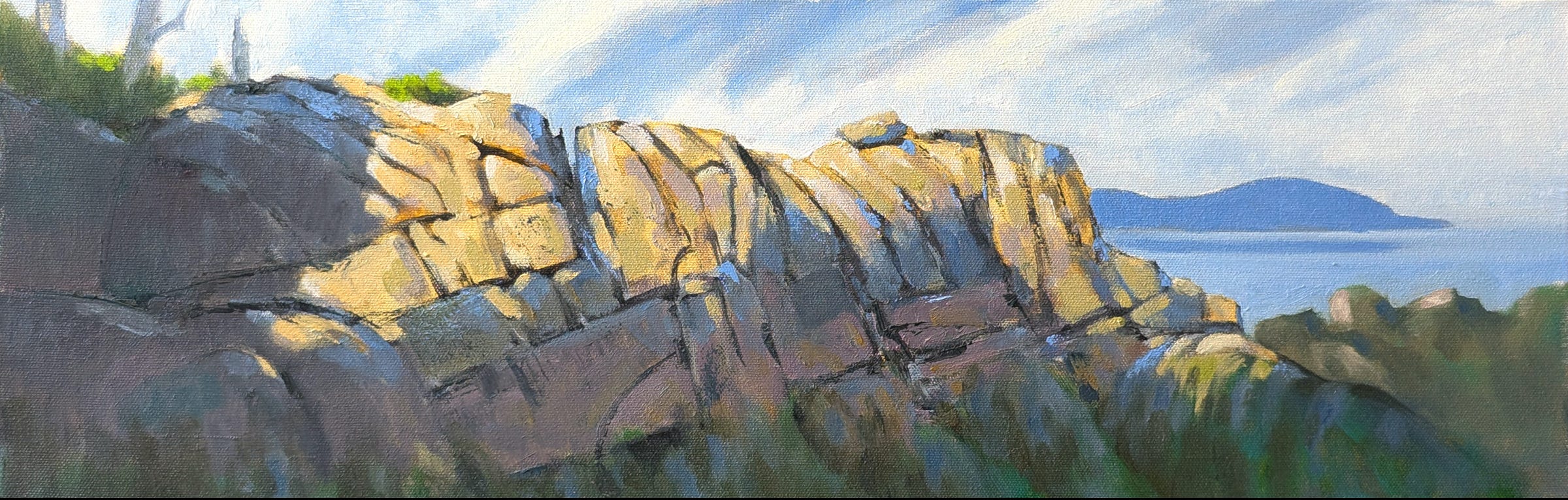
(I’m making this post free for everyone. If you’re not a paid subscriber, I hope you’ll sign up!)
The Bay of Fundy has the world’s biggest tidal range, anywhere from 40 to 47 feet at its head. From the high tide mark to low tide, that’s nearly the height of a five-story building! Campobello Island, which sits along the Bay, doesn’t enjoy quite that range, but at peak it’s still an impressive 24 feet.
When the water goes out, there’s a lot of fascinating stuff that gets revealed: rock ledges draped in dark seaweed, sparkling mud flats, crystal-clear tide pools. My favorite time to paint on the island is when the tide’s out, and it doesn’t matter whether I’m painting in sun or fog—just so long as the tide’s out, I can find something beautiful to paint in the littoral zone.
Littoral zone: The nearshore area where land and water meet. It extends from the high-water mark—where land is rarely submerged—down to shallow water permanently covered by the tide. Because sunlight reaches all the way to the sediment in this zone, it is usually packed with nutrients, vegetation, and diverse marine or freshwater life. Organisms living here (like barnacles, mussels, and tidepool crabs) must survive dramatic daily shifts in moisture, temperature, and salinity.
There are three things I’m mindful of when heading into the littoral zone.
First, time of day. I’m primarily a morning painter, but the tide doesn’t always cooperate. Because tides are determined by the mechanics of moon and sun positions, low tide doesn’t conveniently and neatly happen at the same time of day. So, for example, if low tide is at 8.05 am today, tomorrow it will be at 8:56 am, and the day after that, 9:46 am. (I’m looking at a tide table as I write. These calculations are not an exact science—which is why my tide table is labeled a “tide prediction table.”) After a few days, the tides will have shifted enough that there’s no low tide at all in the morning.
Second, the rapidity of the tide. If I get 24 feet of change in six hours, that calculates out to 8 feet of change every two hours—which is about how long it takes me to make a 9”x12” painting. Whether going in or going out, that 8 feet can make a huge difference in the contours of land and the shapes of rocks. I try to draw in these important shapes on my canvas before I begin painting and also take a photo. By the way, the water doesn’t move at a constant speed; it moves faster during mid-tide and slower near low or high tide.
Third—and I’ll say it again—the rapidity of the tide. When I set up, I try to make sure I understand what’s happening with the water, especially if the tide is coming in. It’s easy to get swamped if you’re not careful or, worse, to get stranded on a bit of land. I’ve had a student set up right by the water’s edge, then lay down her brushes on the sand to take a break, only to return to find that her brushes have floated off to Spain.
By the way, there’s a benefit to getting out to paint about an hour before low tide. In two hour’s time, the water will have come back in and be at exactly the same place it was when you started.
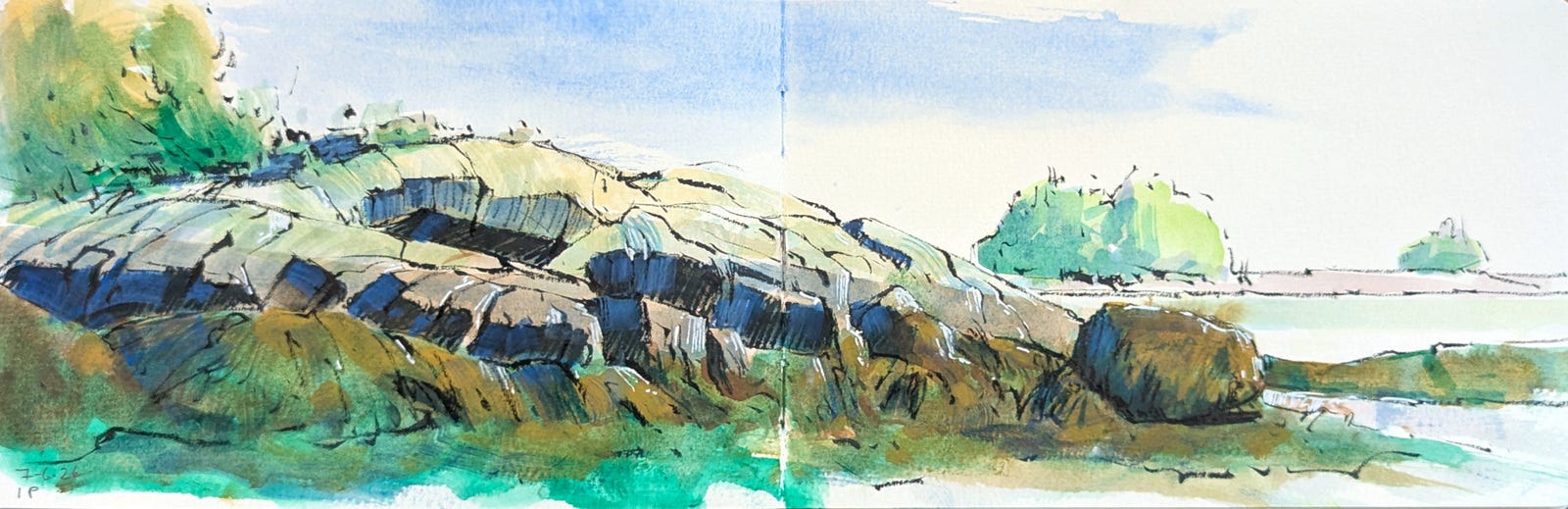
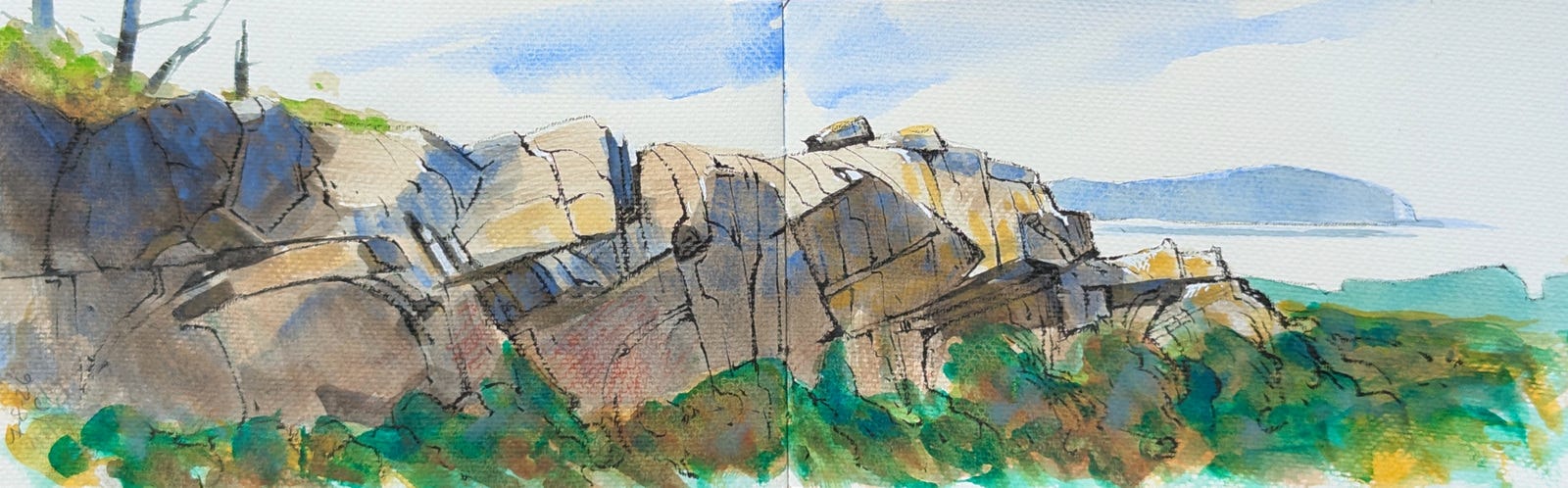
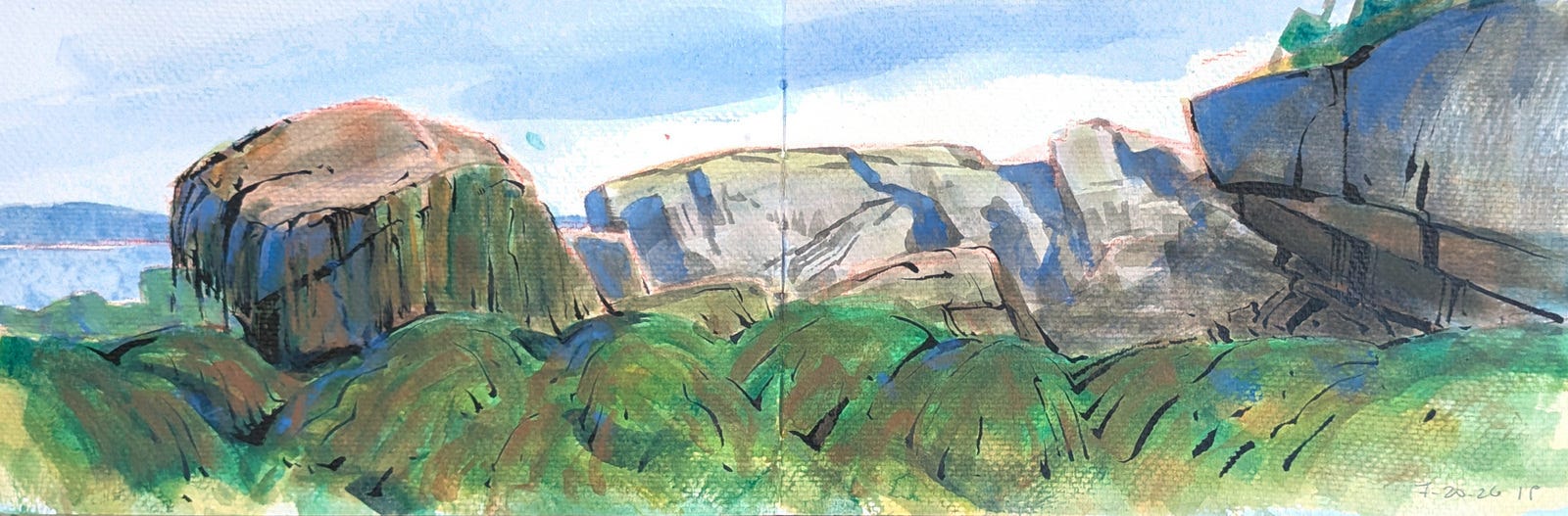
These days, I’m doing a lot of plein air sketching in gouache, so my time isn’t so tight. I can make a 5x8 or 5x16 sketch in my watercolor journal in 30-45 minutes. But as I often like to get right down to the water so I can look up at those seaweed-draped rock ledges, the danger of getting swamped is still there.
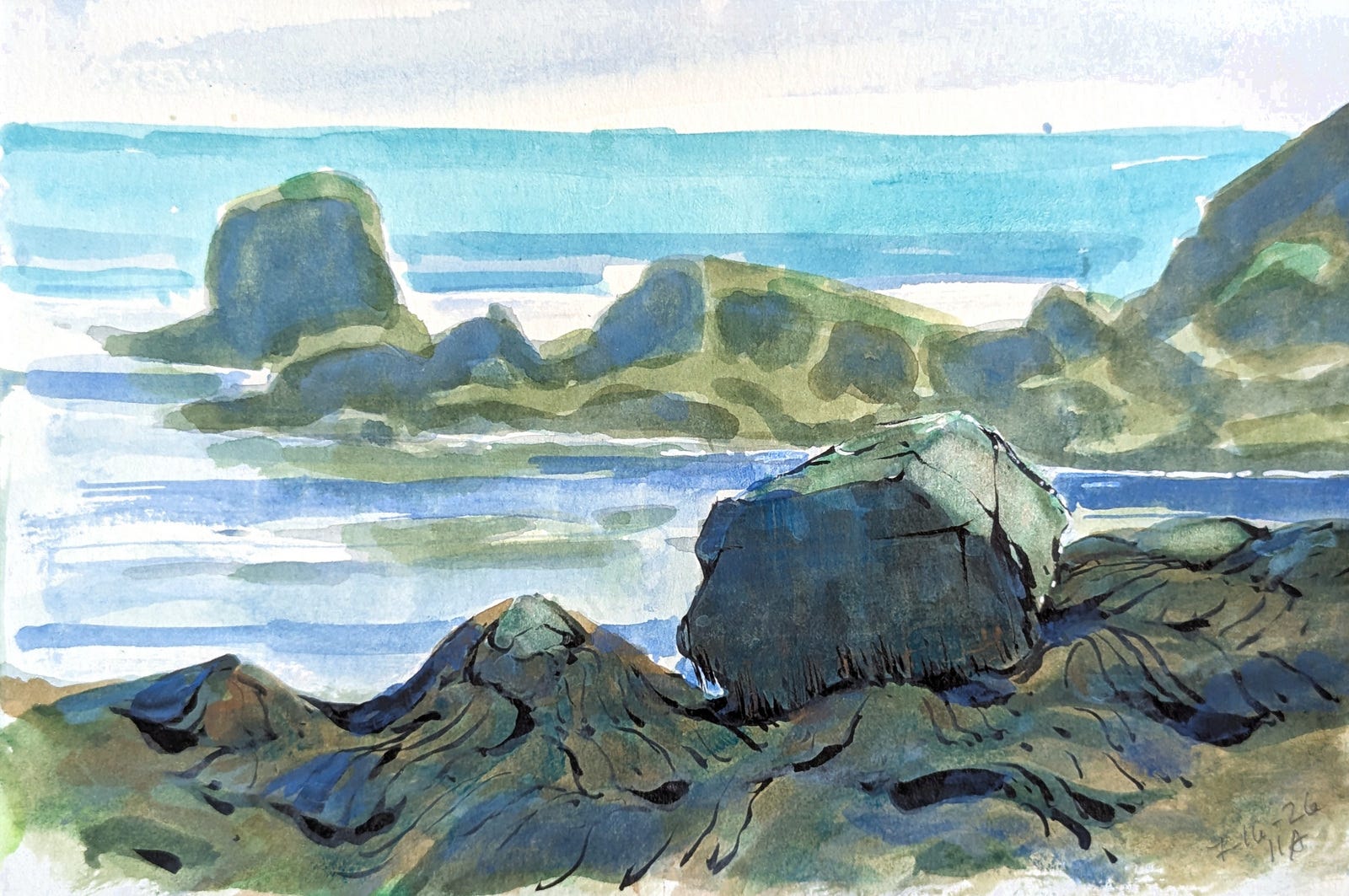
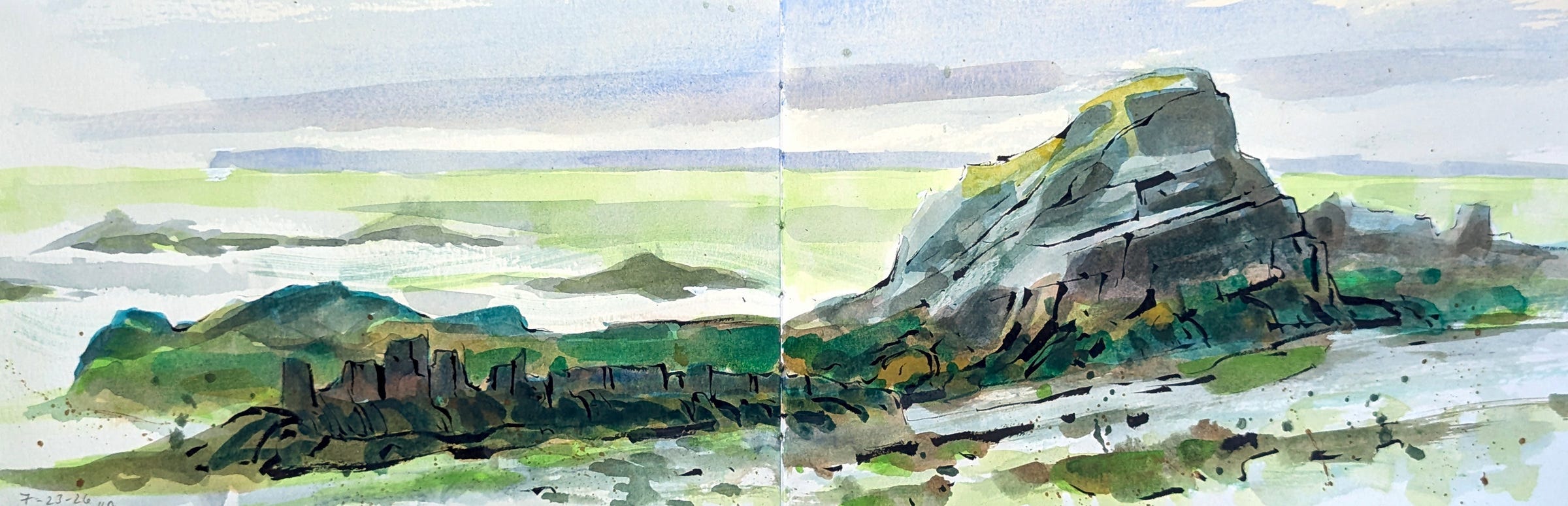
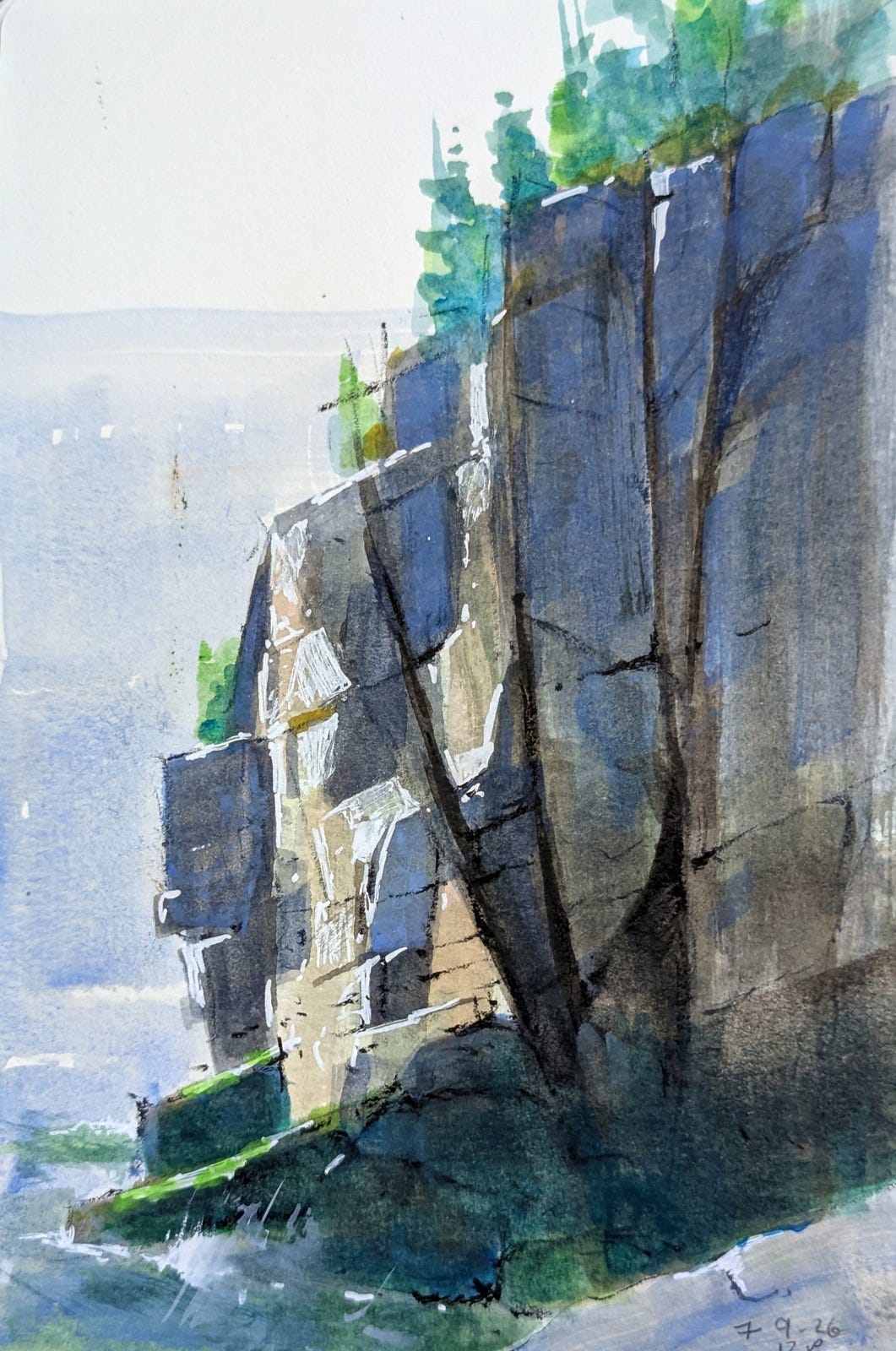
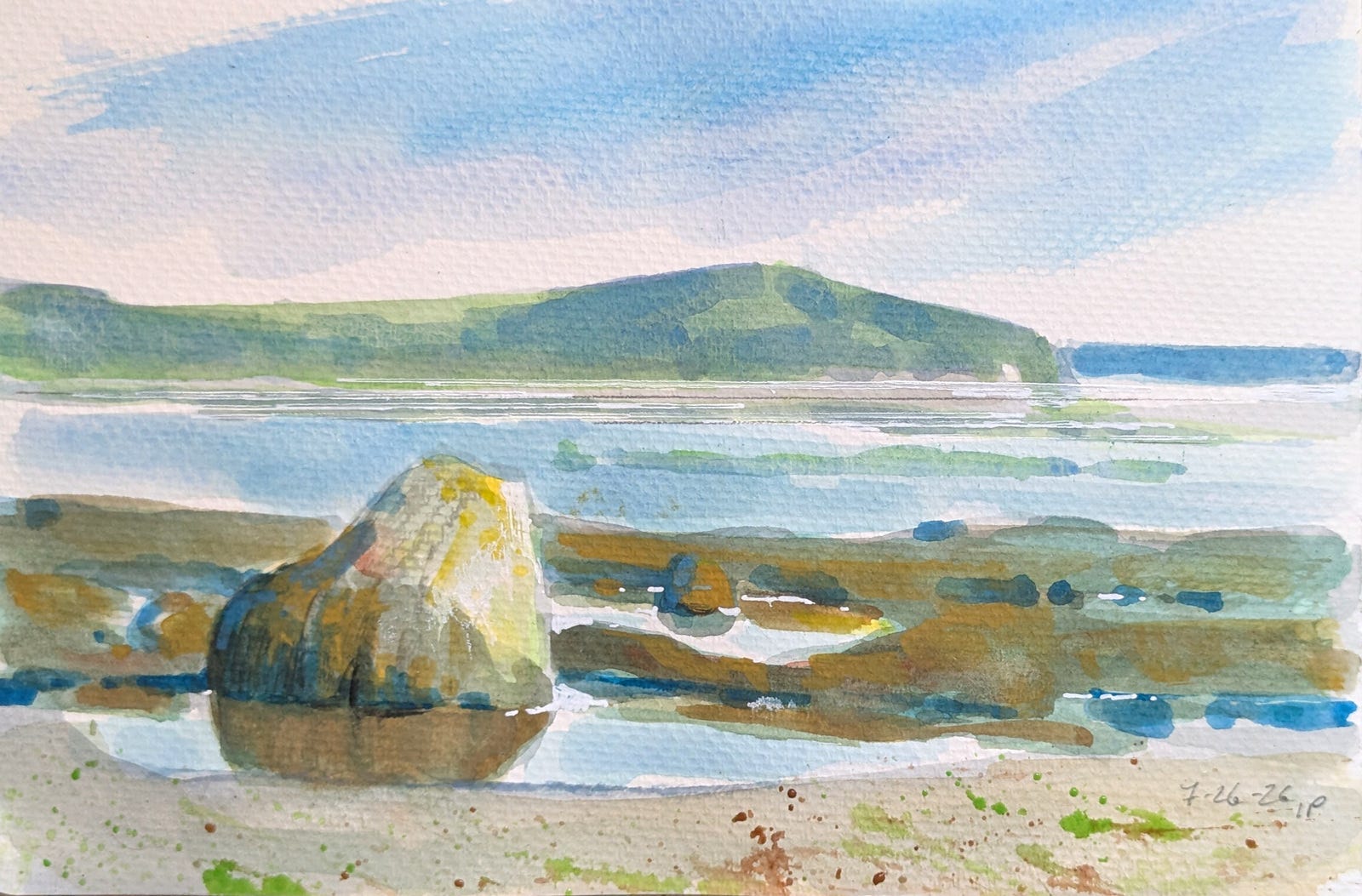
I’ve included some of my gouache sketches from the summer thus far. You’ll note that I make much use of my black pigment-filled ink brush; many of the rock ledges have angular features and very, very dark cracks. There’s also a lot of green in the seaweed, and because it is so dark, the illuminated areas often appear deceptively dark, too—but they still have to be in the light. Green can overwhelm, and all the greens in my pan set look like something you might see on an acid trip, but I’m able to moderate this with reds, browns and grey.
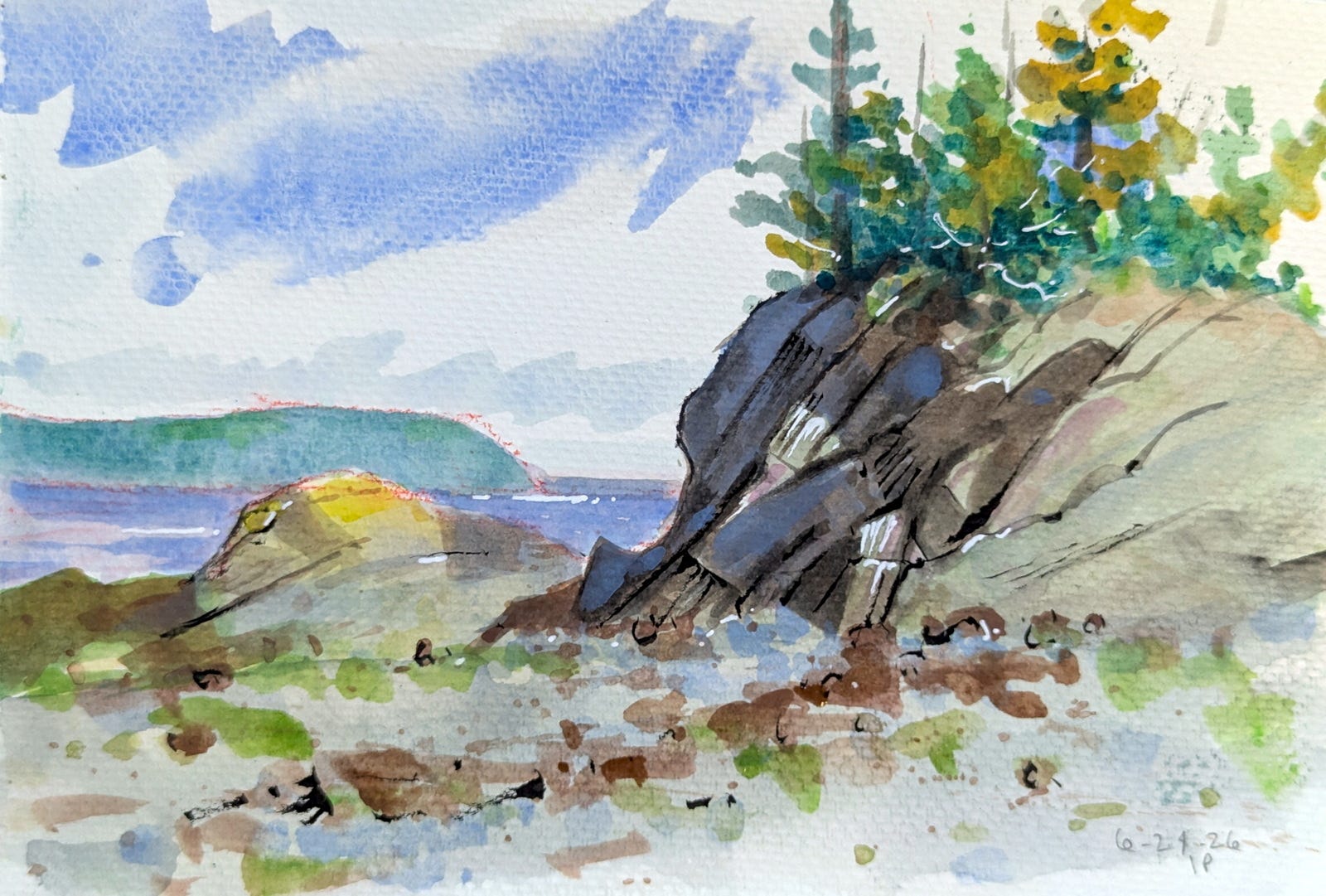
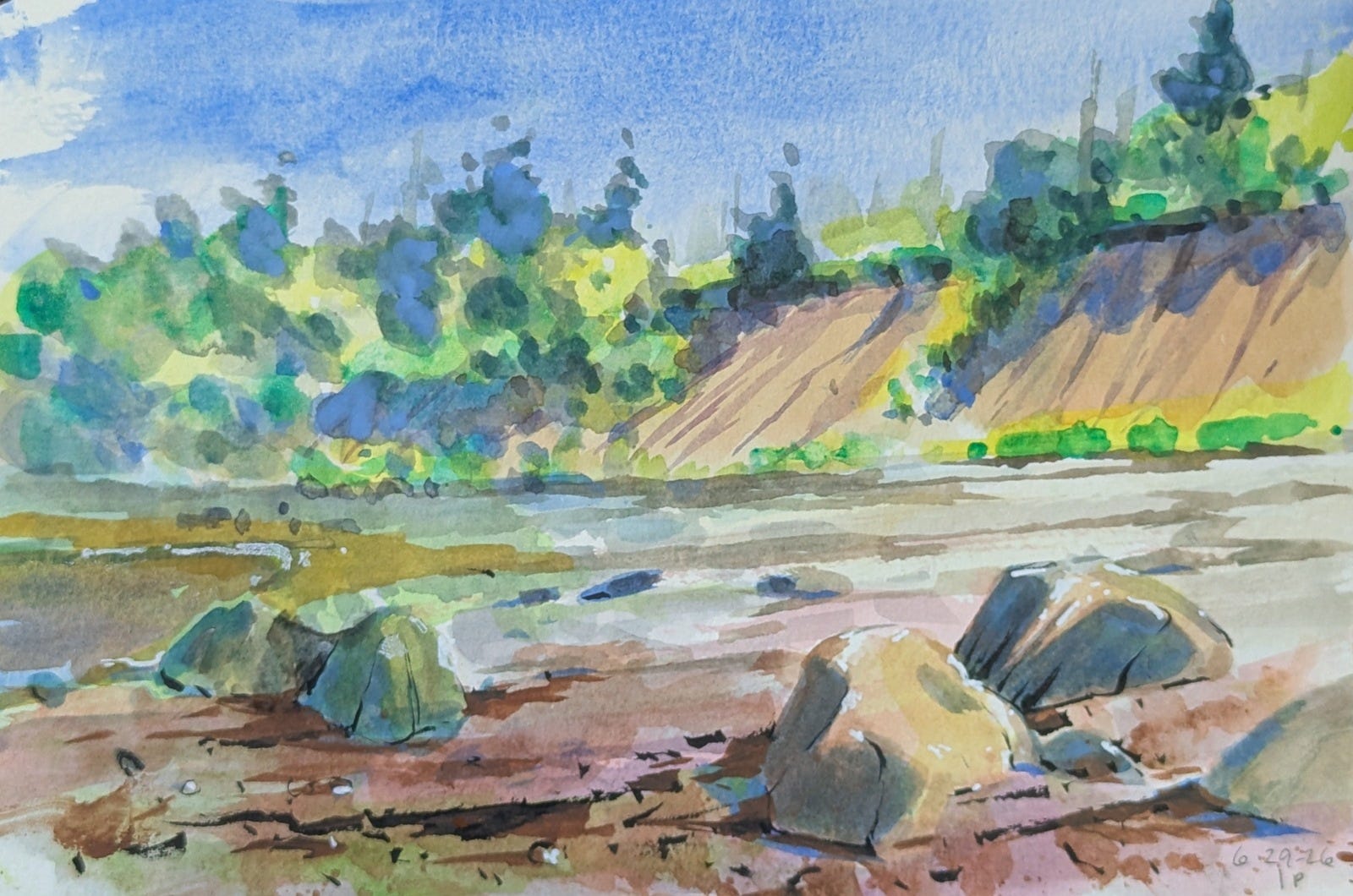
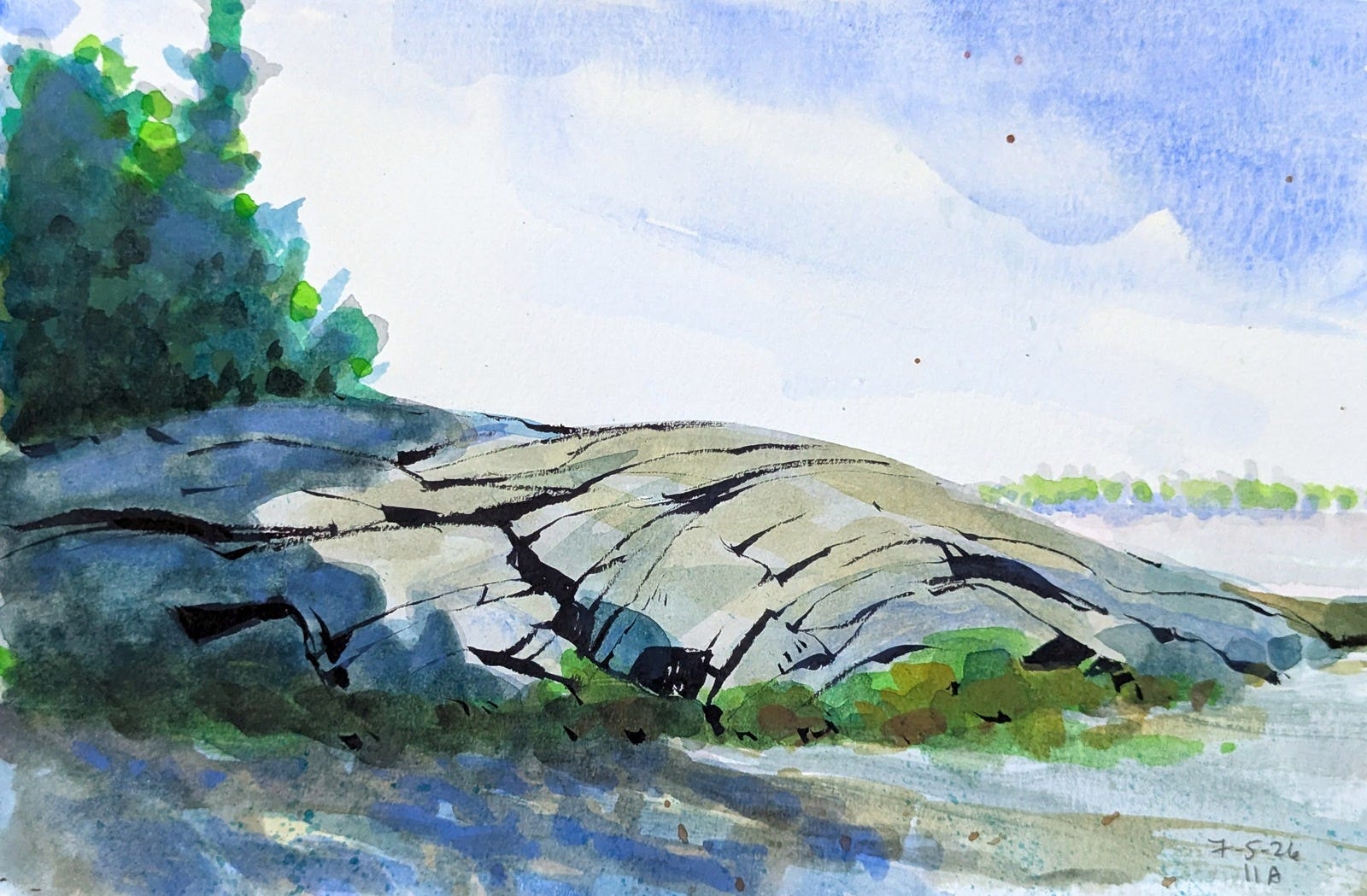
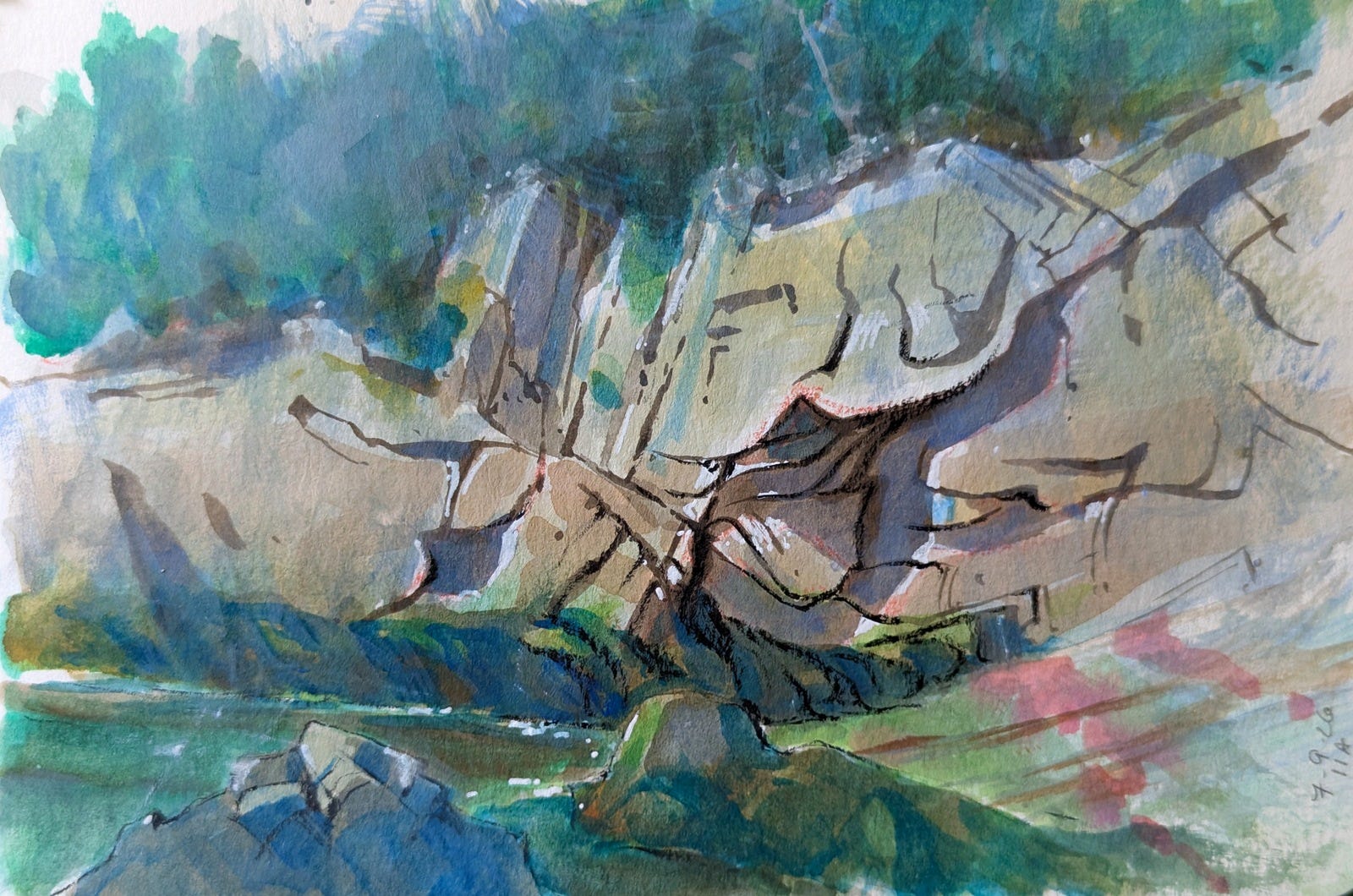
Don’t believe me about the tides? Here is 12 hours collapsed into 1 minute at Hopewell Rocks, in the Bay of Fundy: