

Work Habits
Habits can change--and that's a good thing.
[This column previously appeared in “Writing to See”. I am currently en route to my winter studio in New Mexico and taking a short break! Once I’m back, I plan to do more video demonstrations—I have excellent bandwidth there. I’ll see you all in a week or two.]
Work habits—they change. Back when I first started painting seriously, I painted daily. I worked in pastel, and the medium was so intuitive and immediate that I took to it right away. I loved how easy it was to mix color: I didn’t have to! I simply plucked sticks out of the box and the color sprang forth, fully born. Who wouldn’t want to paint every day, when one didn’t have to struggle?
But after a time, the novelty of pastel wore off, and perhaps I got a little lazy because I found myself not painting as much. Seeking something new, I returned to oil painting—I’d worked in oil previously and only as a hobby while a teen and through college—but I found I had to labor at mixing color. Even so, it was a welcome challenge, and because I really wanted my oils to match (or maybe even exceed!) the level of my pastels, I started painting daily again.
I decided that to get where I wanted to be I’d have to become a Painter with a capital P.
What’s with the capital? you may ask. In my mind, it signifies a professional. Prior to becoming a painter, I was a successful writer—and all because I was a Writer with a capital W, which meant writing every day, even if I didn’t feel like it. So, following the same logic, to become a professional painter, I needed to be a Painter with a capital P, and paint every day.
So I painted and painted. Success came quickly in the form of gallery representation and sales, rounds of workshops to teach, and invitations to national shows and conventions.
But it wasn’t easy to stick with the routine of daily painting. Sometimes it was hard to just…paint. I’m a cost-conscious guy, and painting just for the heck of it seemed somewhat wasteful. And although my batting average had gotten a lot better over the years, I still turned out my share of duds. And who wants half-baked paintings filling up closets?
With writing, cost and inventory storage aren’t issues; I don’t have to pay a dime to sit in front of my laptop, and I can a fit a thousand badly-written novels in just a few square millimeters of disk space.
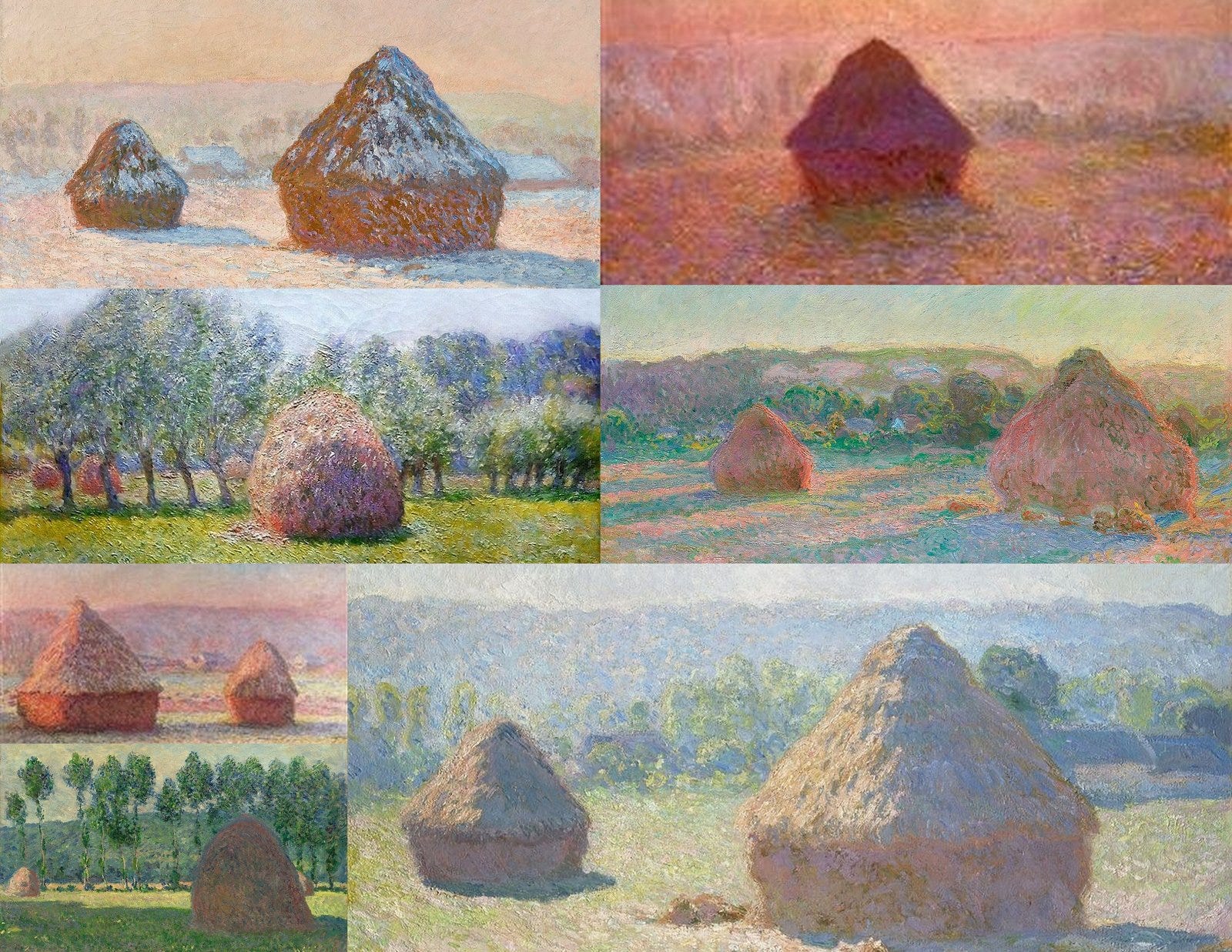
Yet cost and storage haven’t been the whole problem. A lack of inspiration was a bigger obstacle. Sure, I managed to fill my sails now and then by giving myself an exercise like exploring color temperature or experimenting with a new technique, but it wasn’t enough. No, I was running out of subject matter. As a mostly plein air painter, I hike a lot and paint on those hikes. But over time, because there are only so many hikes, I found myself painting the same subjects repeatedly. How did Cezanne not tire of Mount Saint-Victoire? Or Monet of haystacks? Or Van Gogh of wheatfields?
Part of the answer is, of course: These artists weren’t painting the subject but the play of light and shade, of color and atmosphere, properties of light that are ever-shifting and ever-engaging. Subject didn’t really matter. And I got that. It’s something I’ve told my students (and myself) many times over the years.
Knowing this didn’t help, and I began to paint less often, and that worried me.
But lately, I finally realized it shouldn’t.
First, I realized I don’t have to paint every day. After all, I do know how to paint; literally miles of canvas have passed under my brush. Plus, painting depends in part on muscle memory, a kind of memory that doesn’t disappear. (Okay, I’ll just say it: “It’s like riding a bicycle.”) And there are things I’ve learned the hard way that will never leave me. There’s little to gain by forcing myself to paint.
I may take off days—or weeks! I have reached that happy place in an artist’s life where I don’t feel compelled to paint. (Feeling that you absolutely have to paint today, regardless, reminds me of the days when I ran 40+ miles a week; if I skipped a day, I really didn’t feel good about myself. Honestly, it’s not healthy.)
Second, when I do pick up a brush, I do it with INTENT.
I don’t want to paint unless there’s a point to it. What that is, of course, varies. It might be a need to understand some light effect I’ve never seen before or one that strikes me as especially beautiful. It might be a need to try a new technique I’ve heard about or a new product I’ve received. It might be a need to return to pastel if I’ve been painting only in oil lately.
Or, it just might be a need to dust off the brushes and get back to it.
Ruining the delight is so easy if you do something you love constantly. Taking a break or easing up on your schedule nurtures that delight and keeps it going so you can enjoy it for years to come. You’ll be happier for it. I am.
As someone who has always loved stories, I’ve struggled with the pressure of creating something good rather than building a habit of simply creating.
While I can sit and write out words every day as an easy habit, it’s harder for me to get the drawing aspect.
Do you have tips for a beginner (someone struggling to create any sort of semblance of form) trying to learn to draw and paint?
I’m trying to focus on drawing rocks/boulders, which I’ve really enjoyed. But I struggle with line quality. How important is doing “warm-ups” like lines/circles/ellipse for getting a strong base?
This is useful, Im finally realising the paint every day is where im at & would be helpful, just actually got to do it!!